

 ES
 EN
 PL
 RU
Shared or private pool: how much does maintenance really cost?
A private pool costs around €600–€1,200 a year. Shared pool costs are divided among owners, but the amount varies.
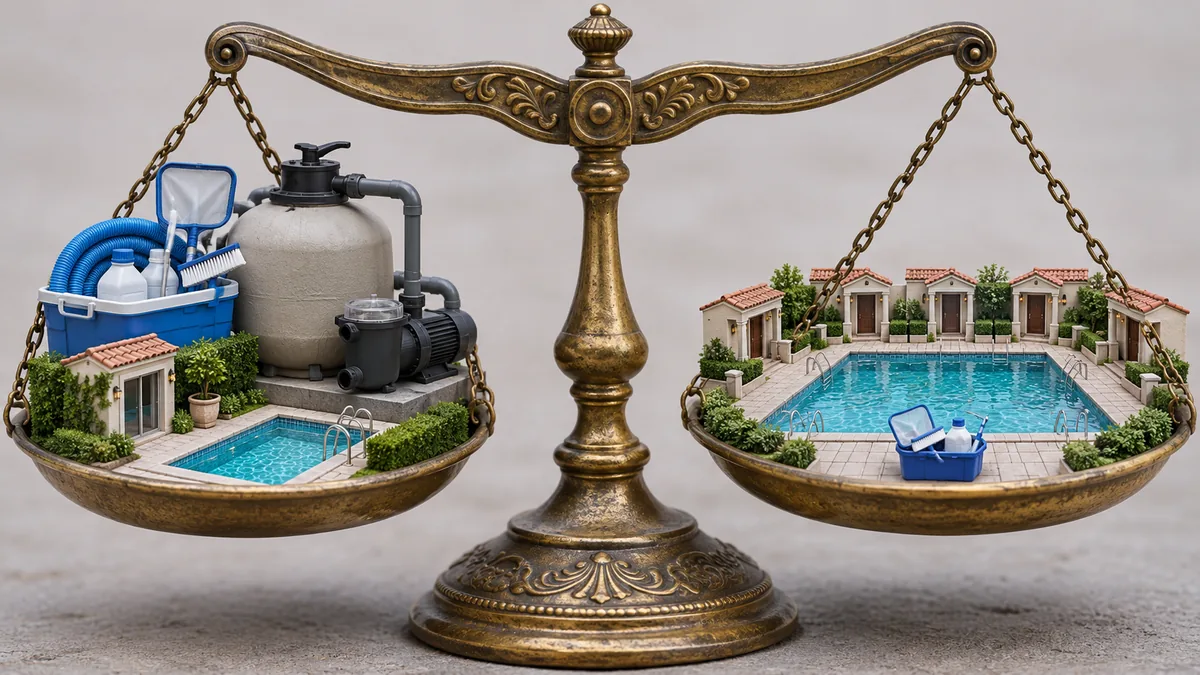
Maintaining a standard private swimming pool generally costs between €600 and €1,200 per year, according to Fotocasa (May 2026), based on Habitissimo estimates. With a communal pool, expenses are shared. In a 2024 study, Spanish consumer organisation OCU estimated approximately €280 per home annually for a development of 40 properties sharing a 20 × 10 metre pool open for three months. These are examples, not guaranteed prices for properties on the Costa Blanca.
The main difference is how the costs are paid. With a private pool, one homeowner covers water, electricity, chemicals, cleaning and repairs. In a residential community, these expenses become part of the shared budget. Under Spain's Horizontal Property Law, contributions generally follow each property's ownership coefficient or another legally established allocation system.
Pool size is a major factor. Larger volumes of water require more treatment and potentially more powerful equipment. Fotocasa (2026) estimates that filling a 40-cubic-metre pool costs between €100 and €200, depending on water tariffs. With proper maintenance, completely replacing the water need not be an annual expense. Evaporation, filter cleaning and regular top-ups still need to be considered.
Electricity is another important item. Fotocasa, referring to Repsol data, gives an indicative filtration pump cost of approximately €36 per month. Actual bills depend on the pump's power, operating hours and electricity tariff. The same analysis estimates annual chlorination costs of €150–€200 and around €100 for pH regulation. These are individual cost components, not automatic additions to the overall €600–€1,200 estimate.
Professional maintenance changes the calculation. Habitissimo (2026) places basic private pool servicing at around €60 per month, with prices exceeding €200 per month for certain larger pools or specialist services. Before comparing quotations, establish whether they cover chemicals, cleaning visits and seasonal preparation, and whether electricity, water and repairs are charged separately.
What about the full cost of a communal pool? OCU (2024) obtained maintenance quotations of €4,600–€5,500 and lifeguard quotations of €4,400–€5,800 for a 20 × 10 metre pool operating for three months. El País (July 2026) separately reported an industry estimate of €12,500–€15,000 annually for communal swimming pools serving developments of 80–120 homes. These figures describe different situations and should not be treated as interchangeable averages.
The total depends on the number of homes, opening period, pool dimensions, maintenance requirements and whether lifeguard cover is necessary. A larger community does not automatically mean a higher contribution for every owner: the allocation method matters just as much as the total budget. Community charges may also include other facilities, making it essential to identify the amount actually attributable to the pool.
Does every communal pool require a lifeguard? Not automatically. Spain's Royal Decree 742/2013 classifies residential community pools as private-use type 3A and individual household pools as type 3B. Different sanitary requirements apply. The Valencian government's 2026 summer safety circular specifies at least one lifeguard for collective-use pools with a water surface of 200–500 m². The requirements applicable to a particular installation must be checked rather than assumed.
What if the owner never uses the pool? Generally, community contributions still apply. Article 9.2 of Spain's Horizontal Property Law states that not using a shared service does not normally remove the obligation to contribute to its expenses, subject to the applicable legal exceptions. The title deeds, community statutes and agreed allocation should therefore be reviewed.
Does a pool stop costing money in winter? Not completely. Even without swimmers, water and equipment need appropriate care. Seasonal covers and a suitable maintenance routine can reduce dirt, evaporation and unexpected cleaning work. Fotocasa also notes that maintaining the water correctly can avoid frequent complete refilling.
Before purchasing a property with a communal pool, request the latest community accounts, current budget, meeting minutes and information about planned special contributions. This is also part of the financial review covered in our homebuying guide. A single monthly community fee may conceal upcoming repairs or expenses unrelated to the swimming pool.
For a private pool, inspect the filtration system, the condition of the pool shell and any existing maintenance agreement. Request an itemised quotation specifying chemicals, servicing frequency, seasonal work and exclusions. A cheaper quotation may simply include fewer tasks. Ultimately, shared pools spread expenses across the community, while private pools provide more control but place maintenance responsibility on one owner. General information as at 13 November 2026; regulations may change, so consult a qualified adviser.
Source: Adel Properties. Text prepared by Adel Properties from the information published by the original outlet.